testing
How Inorderly Was Tested With Shuffled Arrivals and Killed Runs
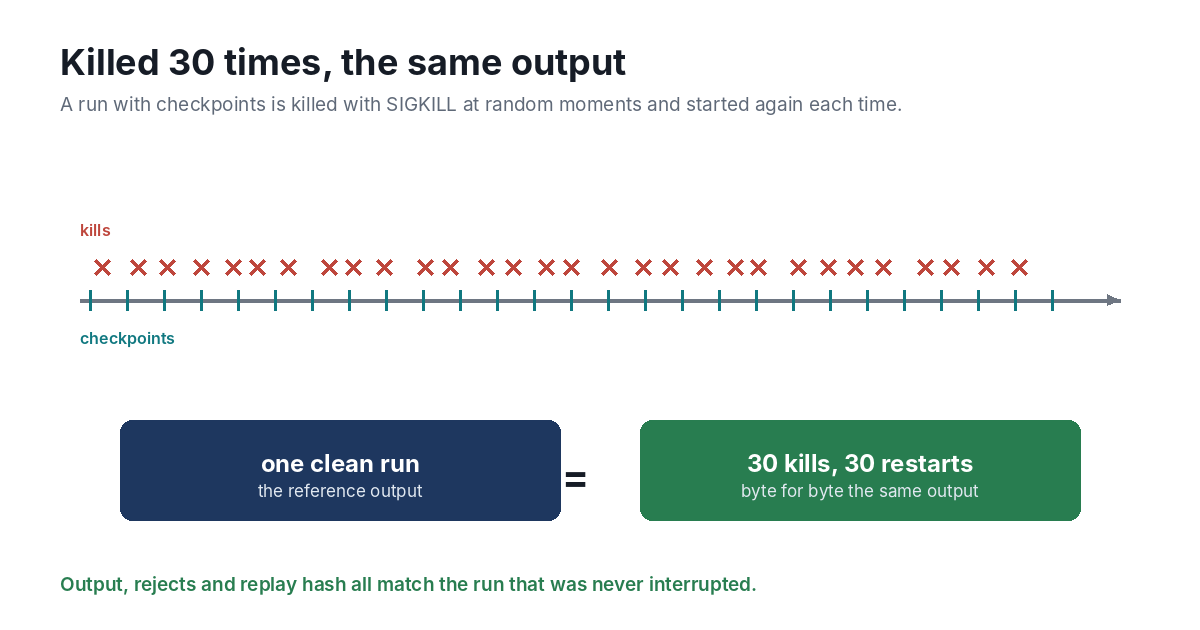
Inorderly makes one promise above the rest: the same events give the same output, byte for byte, however they arrived. That’s an easy thing to say and an easy thing …
testing
Inorderly makes one promise above the rest: the same events give the same output, byte for byte, however they arrived. That’s an easy thing to say and an easy thing …
releases
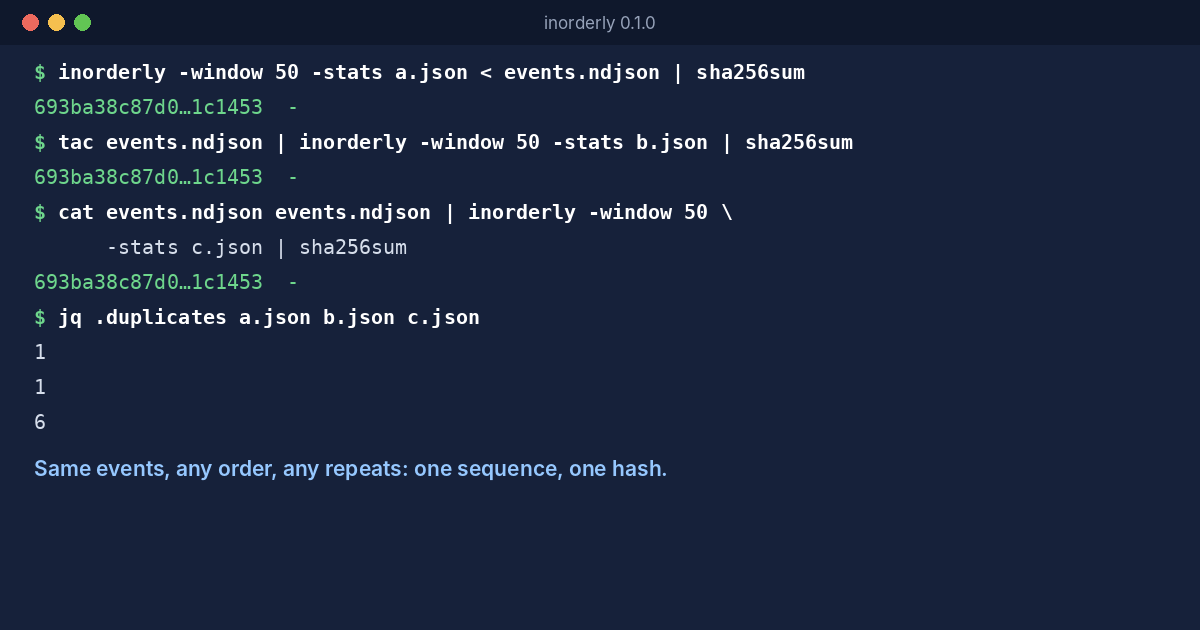
Events don’t arrive the way they happened. A webhook gets retried and the same order turns up twice. A payment service’s clock runs behind the …
use cases
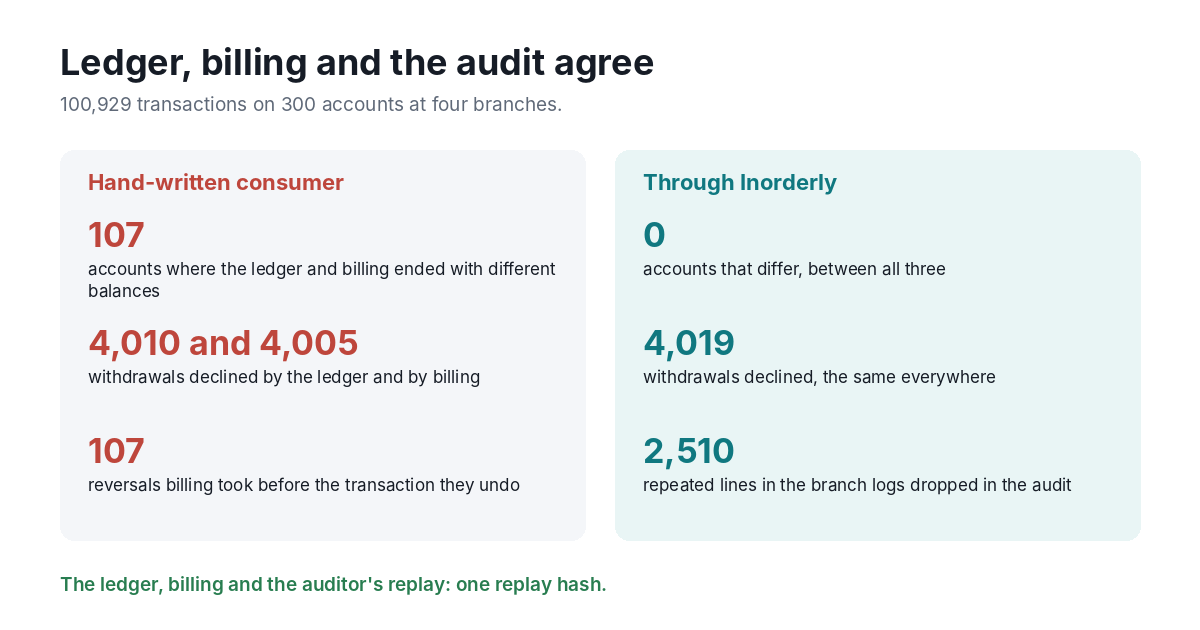
Two systems that read the same events should end up in the same state. They often don’t, and the reason is rarely the code. It’s the order. A withdrawal that …
use cases
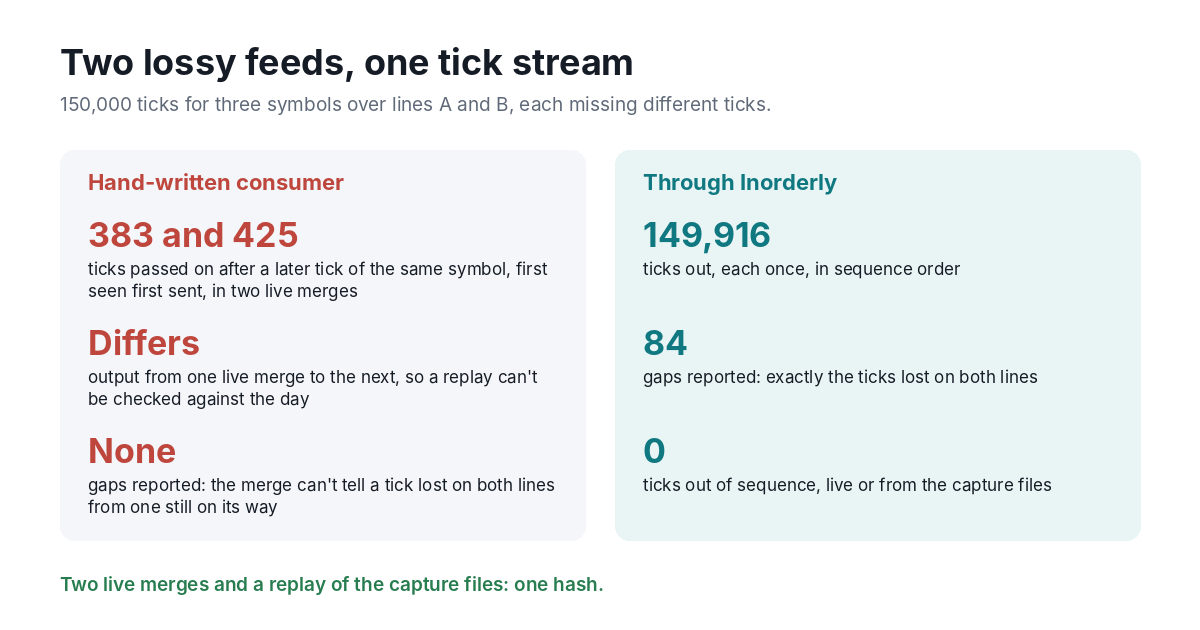
Exchanges send market data twice, over two lines usually called A and B. Each line drops a packet now and then, and rarely the same one. Take both, keep the first copy of …
use cases
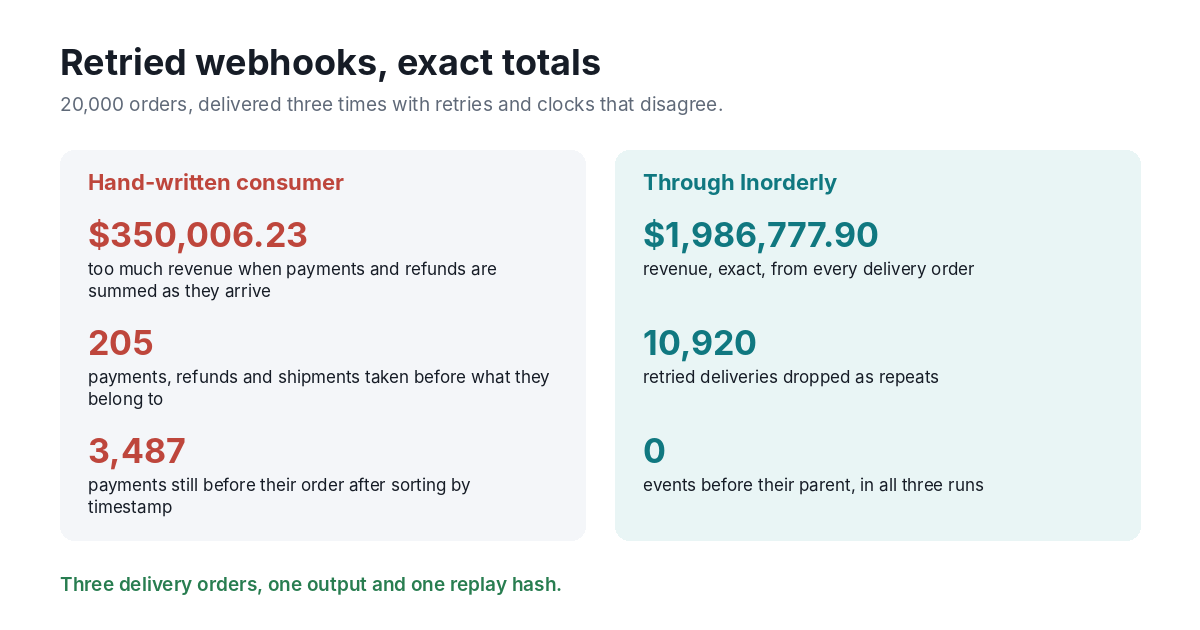
A shop takes its events as webhooks. Checkout sends the order. Payments sends the payment, and later a refund if there is one. The warehouse sends the shipment. Three …
use cases
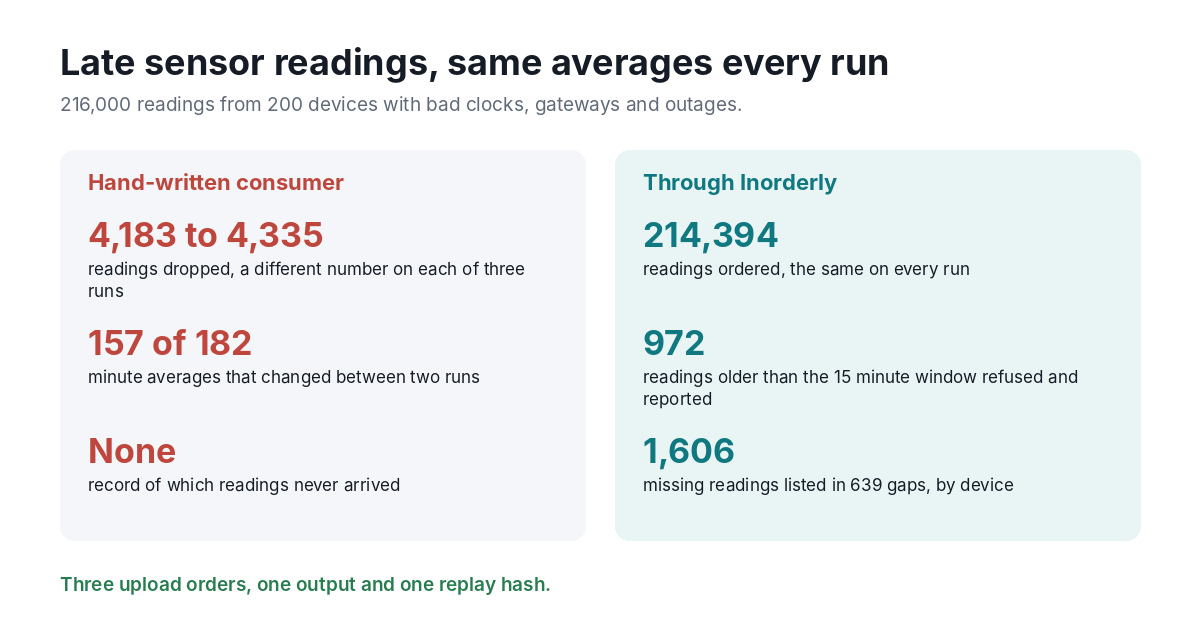
Sensors are the worst-behaved producers there are. Their clocks drift. Some sit behind a gateway that forwards readings in batches. Some lose their connection for a …
event ordering
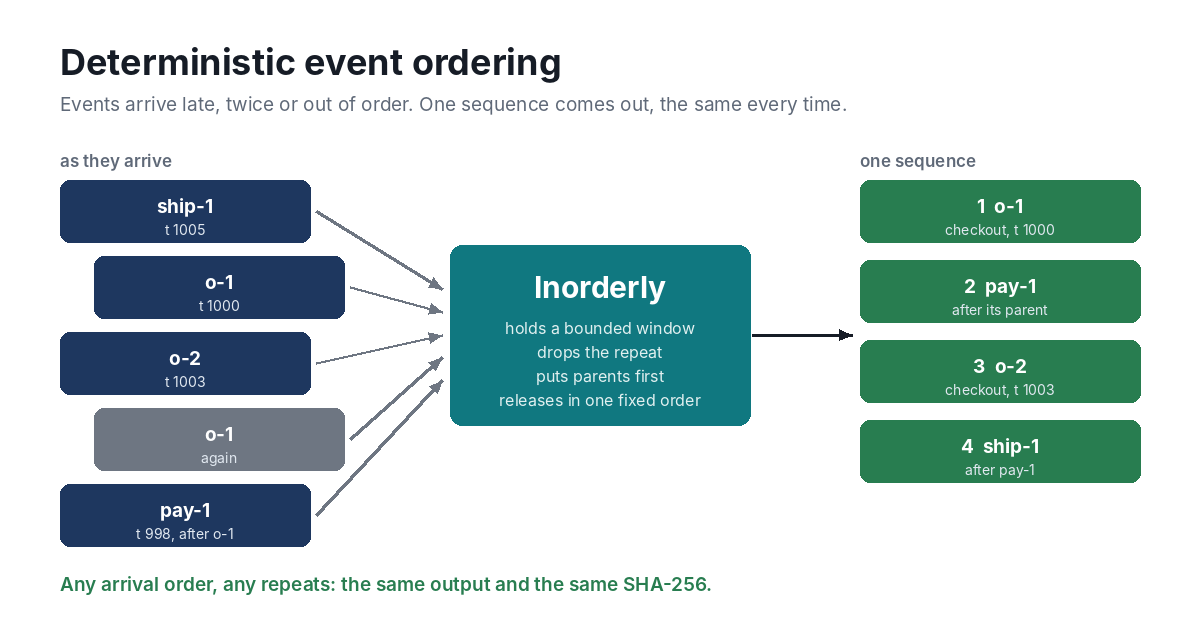
Deterministic event ordering means that the same set of events always comes out in the same sequence, no matter the order they arrived in or how many times each one …
the name
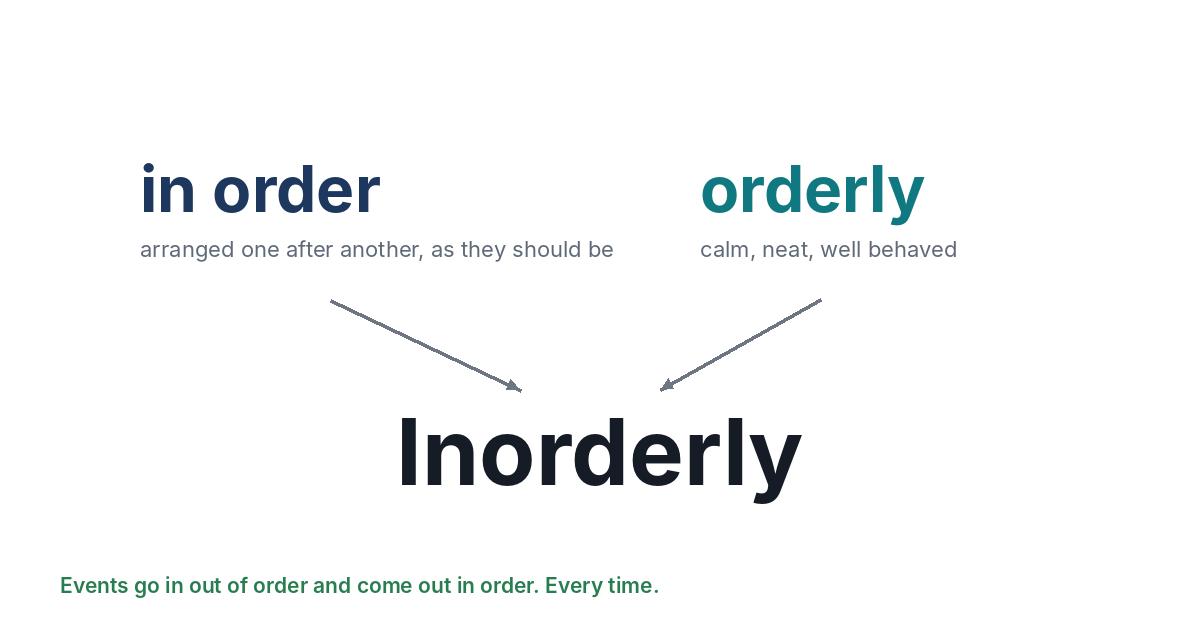
Inorderly is two phrases run together. “In order” is the job: events lined up one after another, the way they should be. “Orderly” is the manner: …